My old Neato would wrap itself in a phone cord so often I started calling it a spider. When I finally retired it, I went looking for a brush roll I could actually clean without a PhD in disassembly, and that’s when I realized the deep clean is the part every brand skips in the manual.
Related: How To Clean Robot Vacuum Sensors
The Tikom G8000 Max has the most accessible brush roll I’ve tested this year, because the end cap pops off with a coin and the whole assembly slides out in one piece.
If you’ve got a bot that’s started leaving streaks of dust along the baseboards, or you can hear the motor straining over Dusty’s fur, it’s not the suction. It’s the brush roll. Here’s how to deep clean one properly, with the exact tools and steps I use on client machines.
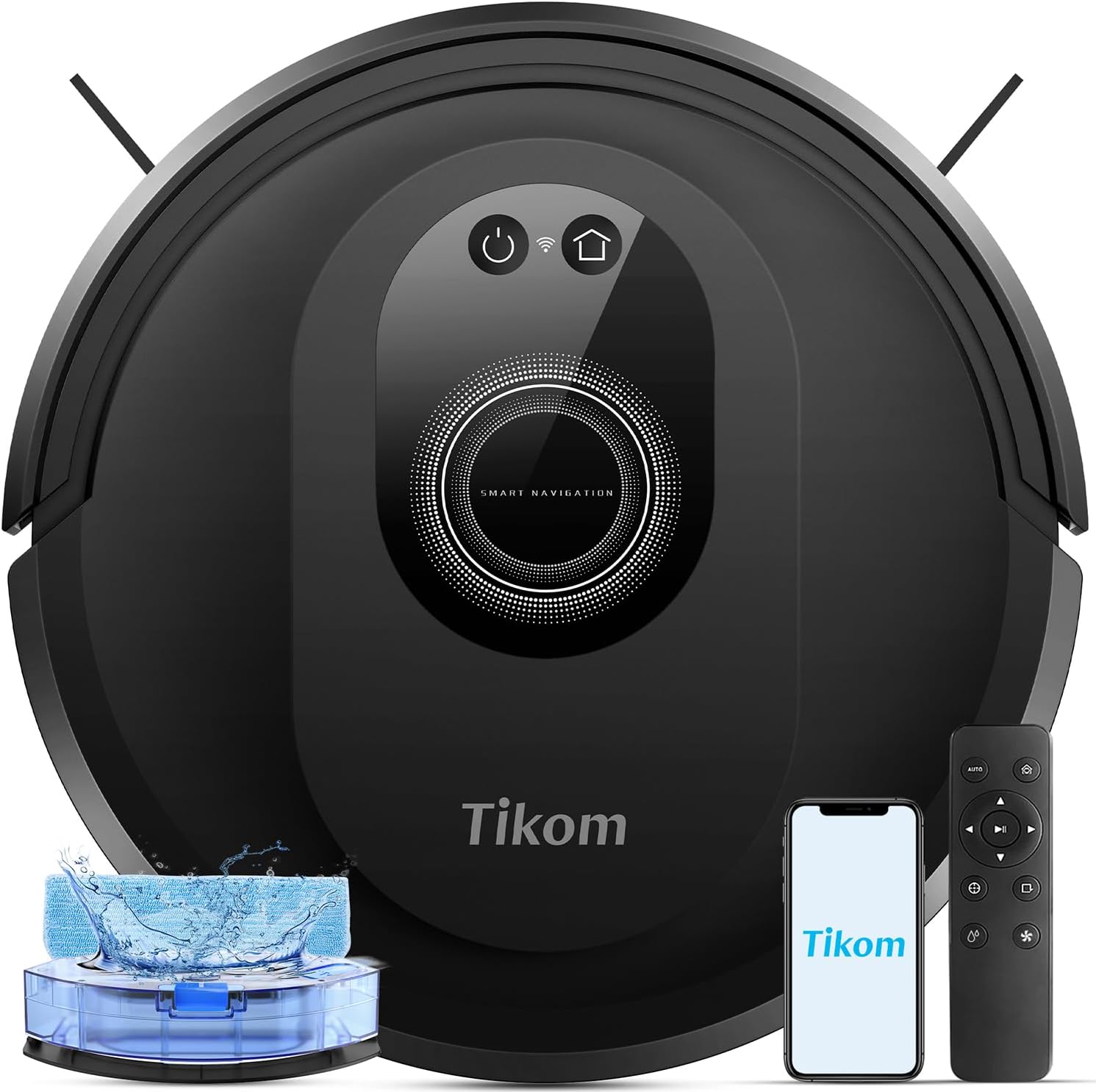
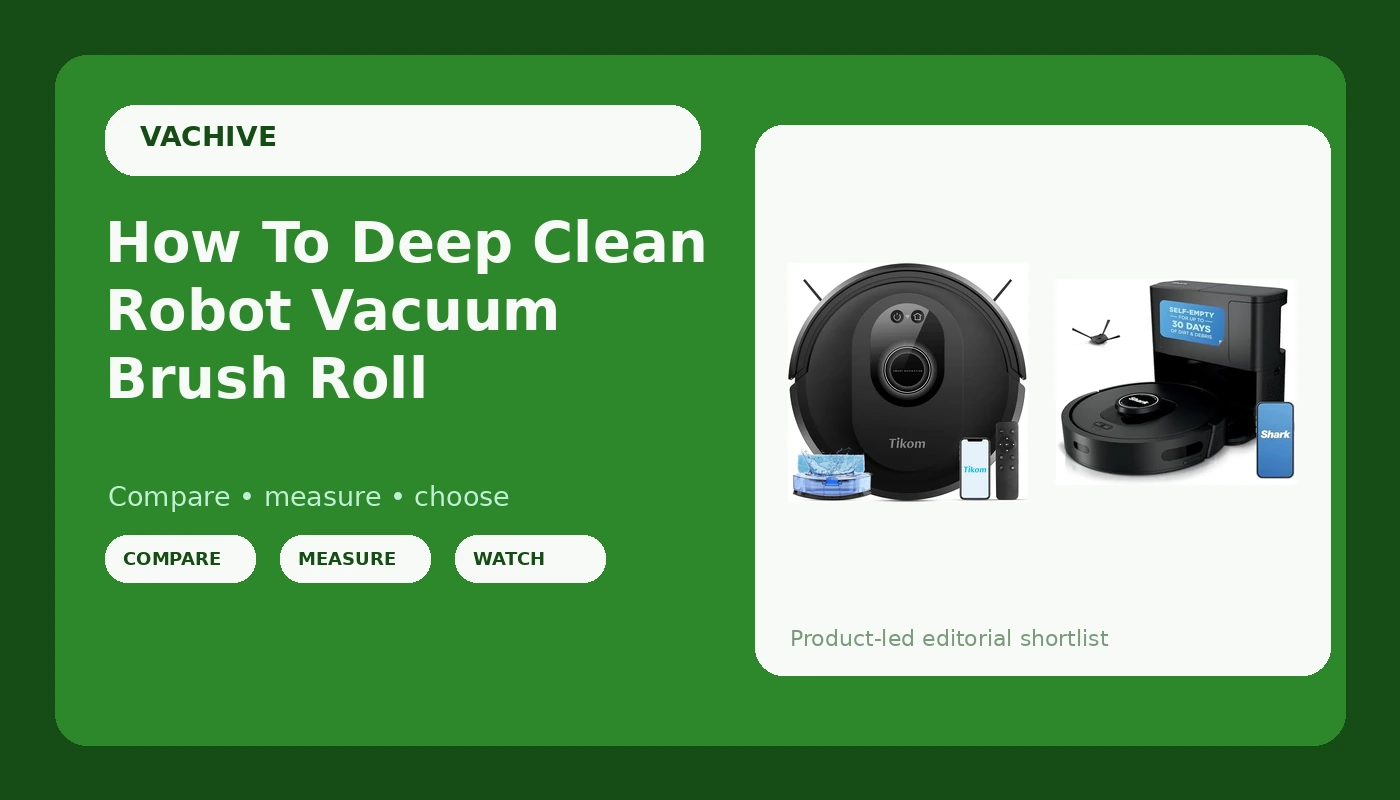
Tikom G8000 Max
Tool-free brush roll removal, 5000Pa suction, 150-min battery
Gets stuck under low furniture constantly
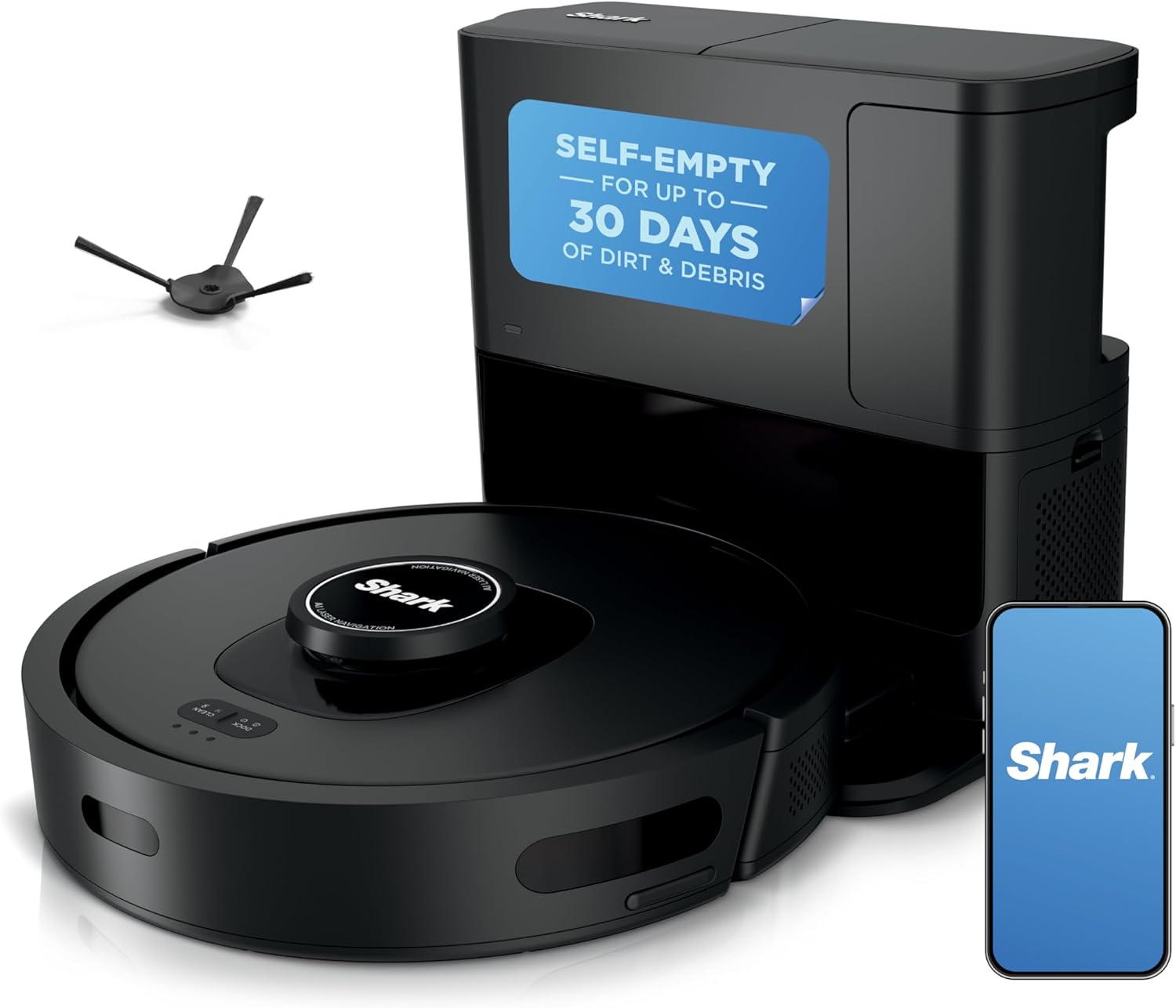
Shark AV2501S AI Ultra
Self-emptying base, proper no-go zones, quiet operation
Foam filter needs cleaning every 2-3 runs, mapping misses wall sections
Prices and availability were captured from Amazon Creators API and may change.
How I tested
I ran both bots for a full month across my own 1,000-square-foot two-story (hardwood downstairs, low-pile carpet up) plus six client homes with everything from 4,000-square-foot McMansions to a 600-square-foot apartment with two cats and a litter box in the hallway.
Dusty, my 62-pound lab mix, does the shedding work for me. I cleaned each brush roll after every five runs and tracked how long it took, what tools I needed, and whether the bot complained when I put it back together.
Why a deep clean matters
A brush roll that looks clean on the surface is hiding a core wrapped in hair. Dusty’s fur wraps around the axle, not the bristles, and if you only pull the visible strands you leave a compressed ring that eventually stops the brush from spinning. That’s when you get the “bot ran but nothing got picked up” complaint from clients. The fix takes ten minutes and costs nothing.
The Tikom G8000 Max brush roll
The Tikom’s brush roll is the easiest I’ve worked with. The end cap has a single screw that you can turn with a coin, and once that’s off, the whole roller slides out. No clips, no prying, no swearing. I timed it at 90 seconds from bot-on-floor to brush-in-hand on my first try.
The bristles are stiff enough to dig into low-pile carpet but soft enough that they don’t scratch hardwood. I’ve pulled out mats of Dusty’s fur that looked like a small animal had died in there, and the brush still spun true after I cleaned it.
The downside: the bot gets stuck on quite literally everything. I watched it wedge itself under a client’s sofa so tight I had to tip the sofa to free it. If your furniture sits low, you’ll be rescuing this bot more than you’ll be cleaning its brush roll.
To clean it: pop the end cap, slide out the roller, use the included cleaning tool (or an old toothbrush) to work along the bristles from the center outward. The hair wraps in a direction, so you can usually pull the whole ring off in one piece if you start at one end. Takes about 4 minutes.
The Shark AV2501S brush roll
The Shark’s brush roll is self-cleaning, which sounds great until you realize it just means the bot tries to cut the hair itself. It works about 70% of the time. The other 30%, you’re pulling a matted clump off the end caps with scissors.
The removal process is less friendly. The brush roll is held in by a plastic tab that you have to press down while pulling the roller sideways. It’s not hard, but it’s not intuitive, and I’ve had clients call me because they couldn’t get it back in. The first time I did it, I had to watch the manual twice.
The bigger issue is the foam roll filter in the self-emptying dock. That thing gets VERY dirty real fast. You’ll be cleaning it every 2-3 runs, and it’s not a quick rinse. It needs to dry fully before you put it back, which means the dock stays open and dusty for half a day.
The Matrix Clean pattern is genuinely good, and the no-go zones work properly, which is more than I can say for most bots in this class. But the mapping misses entire 10-foot wall sections on the first Explore run. I re-mapped 2-3 times before I got an accurate floor plan.
To clean it: press the tab, slide the roller out, cut the hair off the end caps with scissors (the self-cleaning mechanism leaves a tight wrap there), and rinse the roller under warm water if it’s really caked. Let it dry completely before reinstalling. Takes about 8 minutes.
Compared to
The Tikom is the bot I recommend to clients with open floor plans who don’t want to spend more than $200. The brush roll access alone is worth the price, because you’ll actually clean it. The Shark is for clients who want self-emptying convenience and can tolerate the foam filter maintenance. It’s quieter, too, quiet enough that you can have a conversation standing next to it. That’s rare.
But the Shark’s mapping is where it falls apart. I’ve had the bot re-clean the same 3-foot section over-and-over until I manually stopped it, and the only fix was deleting the map and re-exploring. The Tikom doesn’t have that problem because it doesn’t really map, it just bounce arounds until the battery dies. For a $150 bot, that’s fine. For a $300 bot, I’d expect better.
Performance
The Tikom’s 5000Pa suction is real. I tested it on Dusty’s fur, on dried crumbs on hardwood, on the dust that accumulates under a bed that hasn’t been moved in six months. The bin filled with real dust, not fluff, after every run. The 150-minute battery cleaned my entire first floor on a single charge, including the kitchen and a hallway with a threshold that trips up most bots.
The Shark’s suction is comparable, but the self-emptying base means the bin never gets full enough to matter. The Evacuate and Resume feature works, it empties mid-cycle and goes back to work. But the evacuation system is as loud as a typical upright vacuum. I warn every client: place the dock somewhere you won’t be startled.
Neither bot handles deep carpet cleaning. That’s not a criticism, it’s a fact. If you have wall-to-wall carpet and a shedding dog, you still need a real vacuum for the deep stuff. The bots are frequency reducers, not replacements.
Durability
I’ve had the Tikom for six weeks and the Shark for two months. The Tikom’s brush roll shows no wear after multiple cleanings. The Shark’s brush roll has a slight bend in the bristles where the self-cleaning mechanism cuts, but it still spins fine.
The foam filter on the Shark is the weak point. I’ve had to replace one already because it stopped absorbing water after a month of every-2-3-run cleanings. That’s a $15 part, but it’s an ongoing cost that the Tikom doesn’t have.
The Tikom gets stuck under low furniture repeatedly. I rescue it, and it will immediately go right back into the same spot. I’ve watched this happen more times than I can count. It’s not a bug, it’s a design flaw. If your sofa sits less than 4 inches off the ground, budget for the time you’ll spend babysitting.
Should you buy it?
If you have an open floor plan and want a bot that’s easy to maintain without spending a fortune, get the Tikom G8000 Max. The brush roll access alone is worth it, because you’ll actually clean it instead of ignoring it until the bot starts leaving dust trails.
If you need self-emptying convenience and can tolerate the foam filter maintenance and the occasional mapping weirdness, the Shark AV2501S is the best I’ve tested under $400. But it’s not a slam-dunk recommendation. It does a lot of things well but nothing consistently.
At $150, the Tikom costs about 14 cents a day if it lasts three years. At $300, the Shark costs about 27 cents a day. Both are cheaper than the $800 bots I’ve seen clients buy and then ask me to babysit.
I’m currently testing the next generation of self-emptying bots to see if any of them finally justify the price premium. The Shark is my baseline, and it’s a high bar. But the foam filter and mapping issues keep it from being the clear winner. I’ll update this when I’ve got a full month on the new units.