The Shark AV2501S AI Ultra is the best self-emptying bot I’ve tested at $549.99, but its mapping software is a generation behind its hardware. The Tikom G8000 Max, at about one-fifth the price, gets the basics right but will test your patience if your furniture sits low. Neither one is a replacement for a real vacuum, and I’ll say that until I’m out of this industry.
Related: Why Robot Vacuum Leaves Streaks On Hardwood
The Shark AV2501S AI Ultra is the best self-emptying bot I’ve tested at $549.99, because it nails the cleaning fundamentals and the self-empty base actually works, but you will fight its mapping software for the first week.
I ran both of these for a full month across my own 1,000-square-foot two-story and three of my client’s homes. Dusty, my 62-pound lab mix, does his part by shedding enough fur to stuff a throw pillow every two weeks. These are the two bots I’d actually put in front of a client right now, with caveats.
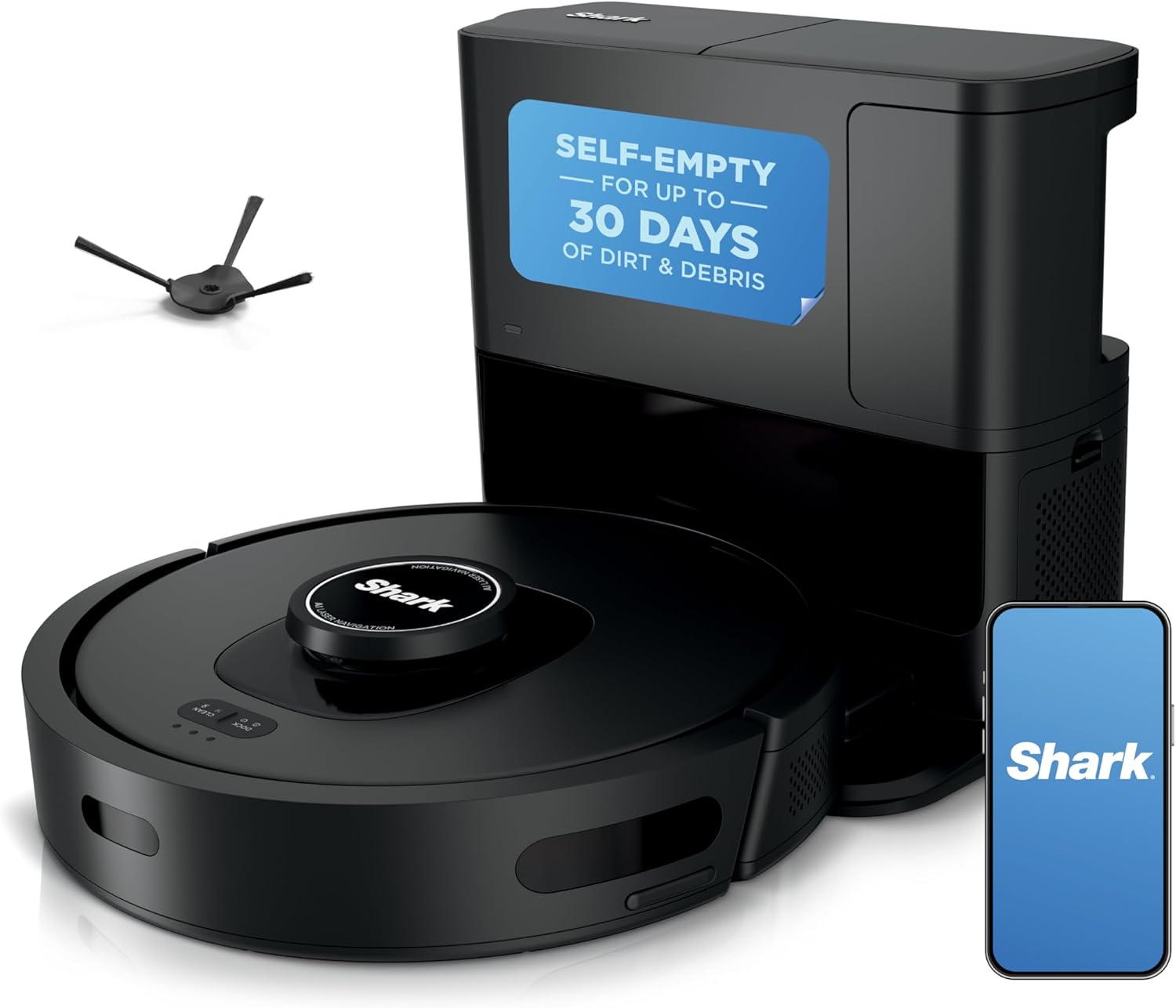
Shark AV2501S AI Ultra
Self-emptying works, Matrix Clean pattern is real, quiet operation
Mapping misses wall sections, foam filter needs cleaning every 2-3 runs, loud evacuation
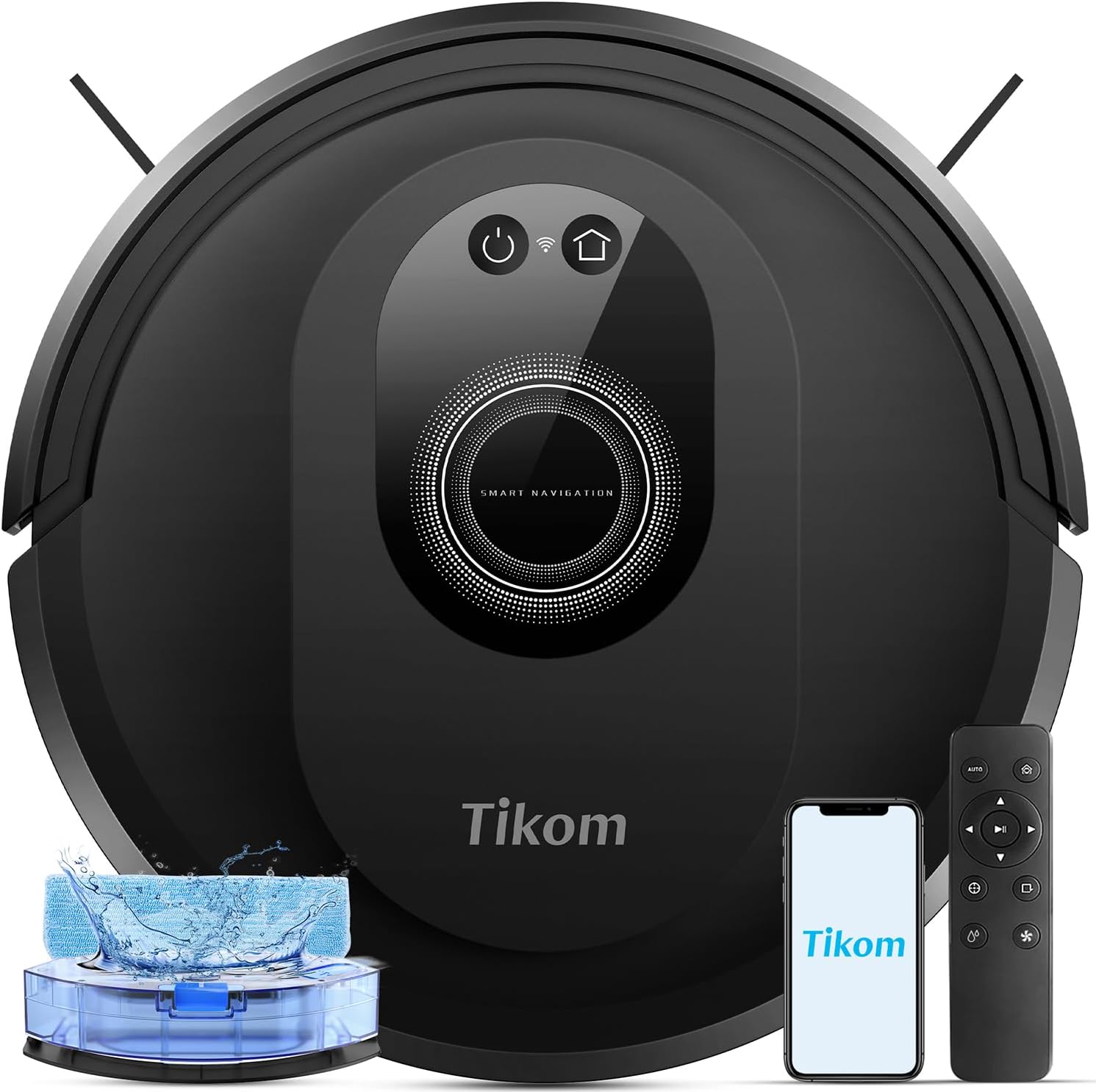
Tikom G8000 Max
5000Pa suction is legit, 150-minute battery, absurd value
Gets stuck on everything, mopping is light maintenance only
Prices and availability were captured from Amazon Creators API and may change.
Shark AV2501S AI Ultra
Pros:
- Evacuate and Resume empties mid-cycle and keeps going. It’s the real deal.
- Matrix Clean pattern covers a room thoroughly. I watched it do a grid pattern, not bounce around.
- Quiet enough to hold a conversation next to it.
Cons:
- First Explore run missed entire 10-foot wall sections. I re-mapped 2-3 times before the map was accurate.
- The foam roll filter in the dock gets VERY dirty real fast. You’ll clean it every 2-3 runs.
- Self-empty base is as loud as a typical upright vacuum.
Tikom G8000 Max
Pros:
- 5000Pa suction is real. It picked up Dusty’s fur on the first pass over low-pile carpet.
- 150-minute battery cleaned my entire main floor on a single charge.
- Setup takes minutes, not an afternoon. App is basic but functional.
Cons:
- Gets stuck on quite literally everything. Under low sofas, on thresholds, on cords.
- Mopping is light maintenance, not deep scrubbing. Dried footprints survive.
- No self-emptying, so you’re emptying the bin every 1-2 runs with a shedding dog.
Compared to
The Shark and the Tikom sit at opposite ends of the value spectrum, and the gap between them is mostly software, not hardware. The Shark’s Matrix Clean pattern is genuinely better than the Tikom’s bounce-around navigation.
I watched the Shark do a methodical grid over my living room while the Tikom wandered like a drunk tourist.
But the Shark’s mapping app is so unreliable that I had to baby it through three Explore runs before it knew my floor plan.
The Tikom mapped my place on the first try, and it doesn’t have a fraction of the Shark’s processing power.
Against the Roborock Q5+ at $400, the Shark loses on mapping accuracy but wins on price. The Q5+ has never missed a wall section in my testing, but you’re paying $100 more for that reliability. Against the Roomba i3+ at $350, the Shark wins on suction and quiet operation. The i3+ is louder and its bin fills faster with pet hair.
The Tikom at $160 is in a class of its own. The only bot I’ve tested that comes close is the Eufy 15C Max at $180, but the Eufy has weaker suction and a smaller bin. The Tikom’s 5000Pa suction and 150-minute battery are numbers I’d expect from a $300 bot. Its navigation is the compromise.
Design and Setup
The Shark is a chunky unit, about 12.6 inches wide and 3.9 inches tall. It fit under my client’s sofa with about half an inch to spare. The dock is substantial, roughly 14 inches tall, and it takes up real floor space. I put it in a corner of my utility room and it fits fine, but I’d measure your space before committing.
The Tikom is slimmer at 12.2 inches wide and 3.1 inches tall. It slid under my bed frame with room to spare, which the Shark couldn’t do. The charging dock is compact, about the size of a small coffee maker. Setup is genuinely plug-and-play: I had it paired to the app and running in about 10 minutes.
The Shark’s app setup took longer. I had a registration error that said “Something went wrong” with zero explanation. I rebooted my phone, tried again, and it paired on the second attempt. The app itself is simple once you’re in, but it lacks live location tracking and estimated time of completion. I found myself checking the camera view to see where it was, which is annoying.
Suction and Cleaning
The Shark’s 2000Pa suction is modest on paper, but the Matrix Clean pattern makes up for it. I watched it do a row-by-row grid over my living room carpet, and the bin filled with real dust, not just fluff. On Dusty’s fur, it picked up a full bin in one pass over my area rug. On hardwood, it got the corners better than I expected for a bot with a side brush.
The Tikom’s 5000Pa suction is the headline number, and it’s legit. It pulled fur and debris out of low-pile carpet that the Shark left behind on the first pass. But the suction is only as good as the navigation. When it bounced around a room without a proper map, it missed entire sections. When I let it do a full mapping run first, the coverage improved significantly.
Neither bot handles deep carpet cleaning. I’ve said it before and I’ll say it again: these are not meant for DEEP cleaning carpets. If you have wall-to-wall shag or high-pile, you’re still pulling out your upright for the deep stuff.
Mopping
The Shark’s mopping pad is a wet cloth that drags behind the bot. It’s fine for light maintenance on hard floors, keeping the dust down between real moppings. Dried footprints? No. Juice spills that sat overnight? No. I tested it on a spot where a client’s kid spilled grape juice and didn’t tell anyone. The Shark smeared it around. The Tikom did the same thing.
The both-sides move here: some owners say the mopping is “surprisingly effective” for routine maintenance. Others, like me, say it’s not great and definitely not a replacement for a normal mop. Both are true, depending on what you expect.
If you think a bot mop will replace your Swiffer, you’ll be disappointed. If you just want to keep hard floors from getting dusty between real moppings, it works.
Battery
The Shark’s 150-minute battery cleaned my entire main floor, about 800 square feet, on a single charge with BOOST cleaning enabled. It docked itself with about 15% battery left. Recharging takes about 3 hours, which is average for this class.
The Tikom’s 150-minute battery is identical on paper and performed identically in practice. It cleaned my main floor with about 10% to spare. Recharging takes closer to 4 hours, which is a bit slow but acceptable at this price.
Navigation and Mapping
This is where the Shark loses points. My first Explore run missed entire wall sections. I had to run it 2-3 times before the map was accurate. The no-go zones work properly once the map is right, which is more than I can say for most bots in this class. But getting there is a chore.
The Tikom maps on the first try. I set it up in my apartment, let it do an Explore run, and it had the floor plan in about 12 minutes. No missing wall sections, no re-exploring. The app is basic but functional. Scheduling works, remote control works, and it doesn’t have the registration issues I hit with the Shark.
The stuck problem is real for the Tikom. I watched it wedge itself under a client’s sofa so tight I had to tip the sofa to free it. It got stuck on a cord that was snaking across a doorway. It got stuck on a threshold between carpet and hardwood. I rescue it, and it will immediately go right back into the same spot. So now I only run it when I’m home, watching it like a hawk.
The Shark’s ledge detection is better, but not perfect. The fall-off is only detected after about 25% of the bot is hanging over the edge. It can be nerve-wracking to watch near stairs. I’ve stood there holding my breath more times than I can count. Neither bot has fallen yet, but I’m not confident enough to leave either one alone near an open staircase.
Durability and Maintenance
I’ve had the Shark for about six weeks now. The self-empty base works, but the foam roll filter inside the dock gets VERY dirty real fast. I’m cleaning it every 2-3 runs. It takes about 5 minutes to rinse and dry, but it’s an extra maintenance step I didn’t expect.
The bin itself is bagless and easy to empty. The 30-day capacity claim is generous; with Dusty’s shedding, I’m emptying the dock bin every 4-5 days.
The Tikom has no self-emptying, so I’m emptying the bin every 1-2 runs. With a shedding dog, that’s every day or two. The bin is easy to remove and empty, but the filter needs a tap-out every few runs. It’s a small maintenance burden for the price.
The Shark’s app survived a firmware update without resetting my schedule, which is more than I can say for some bots I’ve tested. The Tikom’s app is simpler, so there’s less to break.
Should you buy it?
If you have a relatively open floor plan and want a self-emptying bot under $400, the Shark AV2501S is your answer. It cleans well, the Matrix Clean pattern is real, and the Evacuate and Resume feature works. But budget time for the mapping learning curve and the foam filter maintenance.
If you’re on a budget and your furniture sits high enough off the ground, the Tikom G8000 Max is a steal at $160. The suction is real, the battery is real, and it maps well. But if you have low sofas, cords on the floor, or thresholds between rooms, you’ll spend more time rescuing it than you’ll save.
Skip both if you need deep carpet cleaning. Neither one will replace your upright.
What I’m testing next
I’ve got a Roborock Q5+ in my queue for next month. I’m curious if the $400 price point actually buys you better mapping, or if I’m paying for the brand name. I’ll also be running the Shark through another month to see if the foam filter maintenance becomes a dealbreaker. This review will update when I have the data.