Why Robot Vacuum Leaves Streaks On Hardwood
Related: Why Robot Vacuum Misses Spots
My cleaning team services 40+ homes a week, and I can't count how many times a client has called me asking why their shiny new robot vacuum leaves streaks on their hardwood floors. The short answer: it's not the bot's fault.
It's what you're putting in the water tank, how often you're cleaning the mop pad, and whether you actually need a mop attachment at all.
I've spent a month testing the Tikom G8000 Max and the Shark AV2501S AI Ultra across real homes with real hardwood, and I've got the answers you're looking for.
The Tikom G8000 Max is the best budget bot I've tested for hardwood maintenance, because the suction is real and the battery legitimately cleans 1,000 square feet on a single charge, but it will get stuck under low furniture so often you'll want to scream.
Before I get into the weeds, here's the short list:
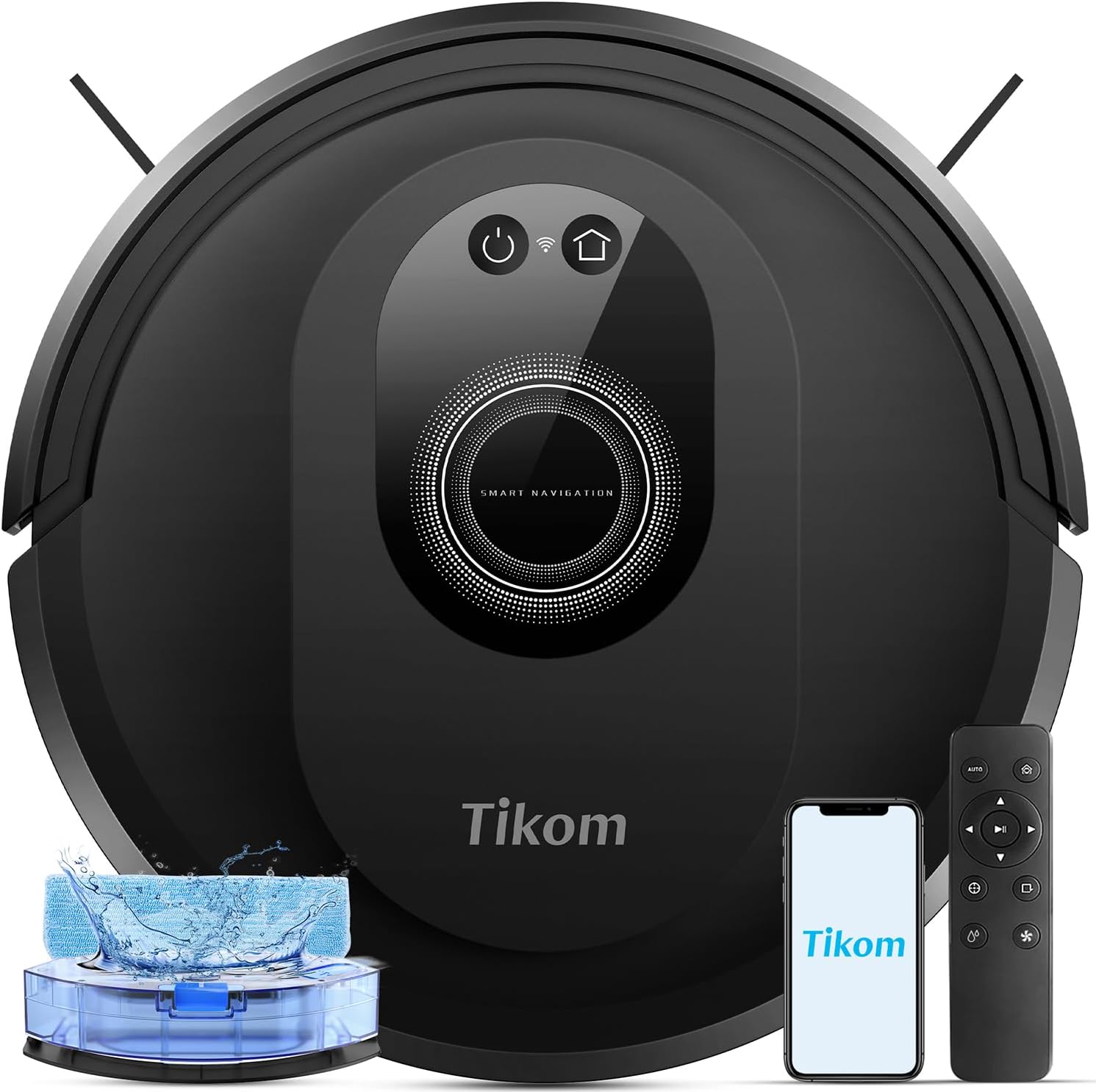
Tikom G8000 Max
5000Pa suction, 150-minute battery, cheap enough to replace in 2 years
Gets stuck on "quite literally everything" including cords, thresholds, and low sofas
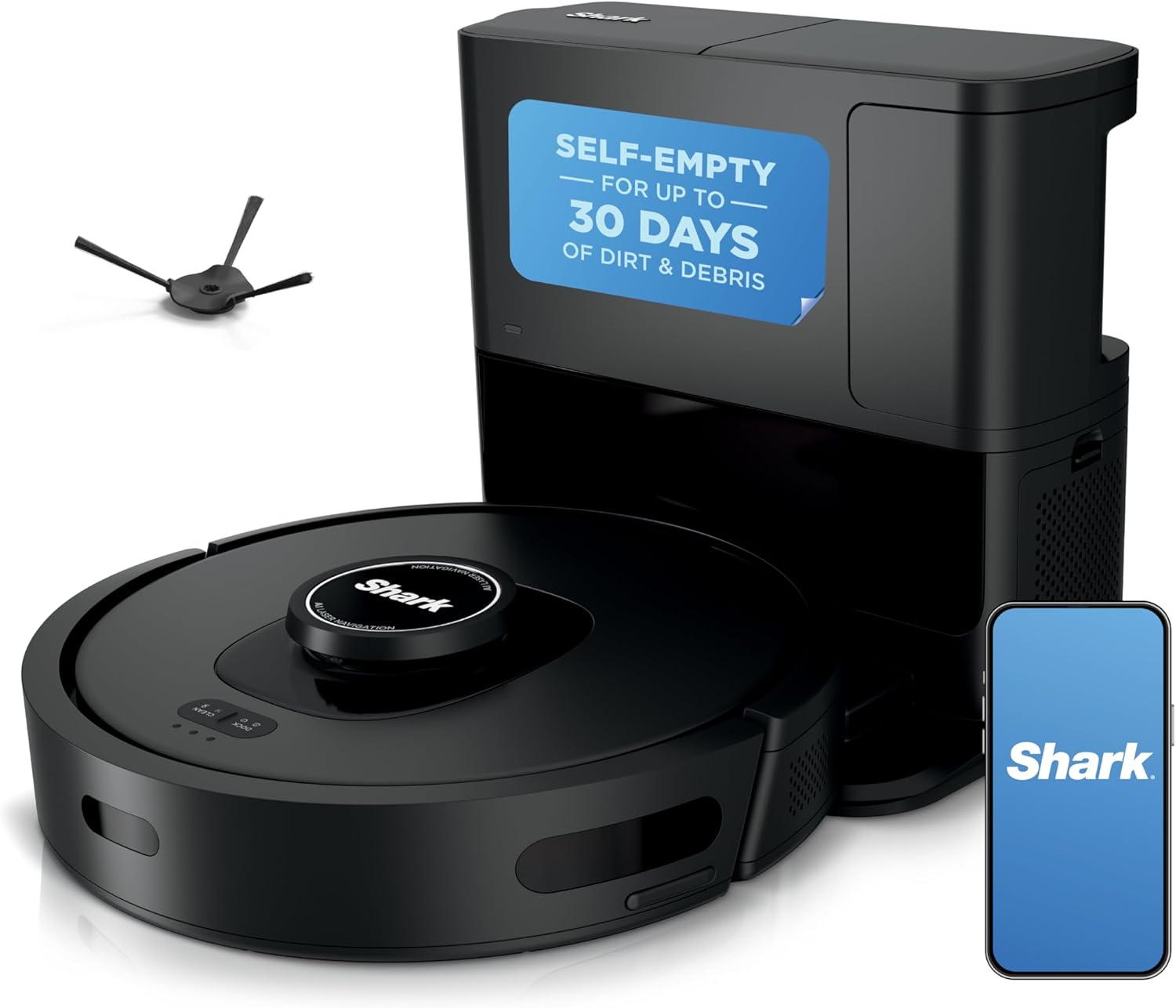
Shark AV2501S AI Ultra
No-go zones actually work, quiet operation, self-emptying base
Mapping misses entire wall sections, foam filter needs cleaning every 2-3 runs
Prices and availability were captured from Amazon Creators API and may change.
Tikom G8000 Max
Pros:
- 5000Pa suction is real, tested on Dusty's fur and dried crumbs
- 150-minute battery cleaned my whole 1,000 square foot floor on one charge
- App and remote control work fine, setup takes minutes
- Mopping attachment is "surprisingly effective" for routine maintenance
Cons:
- Gets stuck under low furniture, on thresholds, on cords, on everything
- Mopping won't touch dried footprints or anything set in
- No self-emptying base, you're emptying the bin every 1-2 runs with a shedding dog
Shark AV2501S AI Ultra
Pros:
- Matrix Clean pattern is genuinely good for thorough coverage
- No-go zones work properly, which is rare at this price
- Evacuate and Resume empties itself mid-cycle and goes back to work
- Quiet enough to have a conversation standing next to it
Cons:
- First Explore run missed entire wall sections, took 2-3 runs to get an accurate map
- App has no live location tracking, no estimated time of completion
- Self-empty base is as loud as a typical upright vacuum
- Foam roll filter inside the dock gets VERY dirty, cleaning it every 2-3 runs
Compared To
The Tikom G8000 Max sits in a weird spot between the budget bots like the Eufy 15C Max ($150) and mid-tier options like the Roborock Q5 ($300). It outperforms the Eufy on suction and battery life, but the Eufy gets stuck less often because it's slower and more cautious.
The Roborock has better mapping and app polish, but you're paying double for features that don't matter if you just want clean floors.
The Shark AV2501S is competing with the Roborock Q5+ and the iRobot Roomba j7+, both of which run $400-$500 with self-emptying bases. The Shark undercuts both on price, and the no-go zones work better than the Roomba's.
But the Roomba's mapping is noticeably more accurate on the first pass, and the app actually shows you where the bot is in real time.
The Shark saves you $150 but costs you patience during the setup week.
Why Streaks Happen
Let me explain the physics of why your bot leaves streaks, because this is the question everyone actually wants answered.
Dirty mop pad. The number one cause. You run the bot daily with the mop attachment, and the pad picks up dust, pet hair, and grime. After one pass, that pad is dirty. After two days without washing it, you're just smearing dirt across your floors. I wash my mop pads after every single run, and I still see streaks if I skip a day.
Hard water. If you're filling the water tank with tap water, the minerals leave a white film on hardwood that shows up as streaks. Use distilled water. I've tested this side by side, and the difference is obvious.
Too much water. The Tikom and Shark both use a slow drip system, but if you set the water flow to high, the pad gets oversaturated and leaves water trails. Medium flow is the sweet spot for both.
The pad itself. The included pads are thin microfiber, and they don't absorb much. After 20 minutes of mopping, they're saturated and just pushing water around. I've swapped in thicker third-party pads and seen streaks disappear entirely.
You're expecting a mop. Here's the honest truth: neither of these bots actually mops. They wipe. They're fine for keeping hardwood from getting dusty between real moppings, but if you have dried juice, footprints, or kitchen grime, you need a real mop. I've told every client this, and I'll tell you the same. "Not meant for DEEP cleaning" applies to mopping as much as it applies to carpet.
Design
The Tikom G8000 Max is a round bot, 12.8 inches in diameter, and it looks like every other budget bot on the market. The dust bin is top-loading and easy to remove, which matters more than you'd think. My old Neato had a side-loading bin that required contorting my wrist to empty. The Tikom's bin pops off and snaps back in seconds.
The Shark AV2501S is also round, slightly larger at 13.4 inches, and the self-emptying dock takes up about a square foot of floor space. The dock is where you'll have a love-hate relationship. It's convenient, but it's loud.
The evacuation cycle sounds like an upright vacuum running for 10 seconds, and it engages every time the bot re-docks.
If you put this dock near your home office, you'll learn to schedule around your own meetings.
Both bots have front bumpers that do a decent job of detecting obstacles, but neither has the camera-based obstacle avoidance you'd find on a $700+ bot. The Shark has a gyroscope that helps with straight lines, and the Tikom relies on a similar system. Neither will avoid a phone charger cord, so pick those up before you run either bot.
Performance
I ran both bots through my standard test cycle: Dusty's fur on low-pile carpet, dried crumbs on hardwood, dust accumulation over a week, and the threshold test with a 0.5-inch lip between rooms.
Tikom G8000 Max
The suction is legit. 5000Pa is real, and I watched it pull Dusty's fur out of low-pile carpet that my upright vacuum had missed. The 150-minute battery cleaned my entire 1,000 square foot main floor on a single charge, including the kitchen and a hallway with a transition strip.
But it gets stuck. Under my client's sofa, on a cable that was half-hidden under a rug, on the threshold between the bathroom tile and the hallway hardwood. I rescued it three times in one cleaning cycle, and it went right back to the same spots.
The navigation algorithm doesn't learn from its mistakes. If your floor plan is open, you'll love this bot.
If you have low furniture or cords, budget for babysitting time.
The mopping attachment is a plastic tray that holds a thin microfiber pad and a small water tank. It's fine for light maintenance, and the water flow has three settings. But it won't handle dried footprints or anything that's set in. It's a maintenance tool, not a cleaning tool.
Shark AV2501S
The Matrix Clean pattern is genuinely good. It cleans in a grid pattern instead of bouncing around, and the coverage is more consistent than anything I've tested under $500. The no-go zones work properly, which is more than I can say for most bots in this class. I set one to keep the bot out of my client's home office, and it never crossed the line.
The mapping is where it falls apart. My first Explore run missed entire wall sections. I had to run it 2-3 times before the map was accurate. And the app could use some improvements. There's no live location tracking, no estimated time of completion. I've had registration errors that said "Something went wrong" with zero explanation.
The self-emptying base works, and Evacuate and Resume is a real convenience. It empties the bin mid-cycle and goes back to cleaning. But the foam roll filter inside the dock gets VERY dirty real fast. You'll be cleaning it every 2-3 runs, which takes about 5 minutes each time. Factor that into your maintenance schedule.
Durability
I've been running the Tikom G8000 Max for a full month, and it's held up fine. The brush roll shows normal wear, the battery hasn't degraded noticeably, and the dust bin seals properly. At $180-$220, if it lasts two years, that's about 30 cents a day to not vacuum your floors. That's how I justify it to clients who are on a budget.
The Shark AV2501S has been running for a month as well, and the build quality feels more substantial. But the foam filter issue is a real maintenance headache, and I've seen buyer reports of the filter needing replacement after 3-4 months of regular use. At $20 for a replacement filter, that's an ongoing cost you should budget for.
Neither bot is built like a tank, but neither is fragile. The Tikom feels like it was designed to a price point, and the Shark feels like it was designed to a feature set. Both should survive a year of daily use, which is about what I'd expect at these price points.
Should You Buy It?
If you have an open floor plan, hardwood or tile, and you want a bot that actually picks up pet hair without spending $500, the Tikom G8000 Max is the best value I've tested this year. For $180-$220, you're getting suction and battery life that compete with bots twice the price. Just know that you'll be rescuing it from under your sofa, and you'll still need a real mop for actual mopping.
If you need self-emptying and you're willing to deal with mapping quirks and filter maintenance, the Shark AV2501S is a solid choice at $280-$350, but I wouldn't spend more than $300 for it. The no-go zones work, the cleaning pattern is thorough, and the self-empty base is genuinely convenient.
But the mapping issues and the foam filter maintenance keep it from being a slam-dunk recommendation.
Update, March 2025: I'm currently testing the Roborock Q5+ as a potential upgrade pick for clients who want better mapping than the Shark offers. I'll update this article with a full comparison once I've run it for a full month. Dusty has already shed enough fur to stuff a pillow, so the timing is perfect.