Related: Robot Vacuum Maintenance: The 10-Minute Weekly Reset
I have cleaned houses for nine years. For the last several of those I have run robot vacuums in other people's homes, which is a very different job from running one in your own. My team services more than 40 homes a week, and I keep a drawer of promising units that failed on a job site and never came back out.
Here is the honest version of the robot vacuum and mop combo question. The vacuum part works. The mop part is a damp pad that refreshes a sealed hard floor, and that is all it will ever be. If you are shopping a combo because you want to stop mopping, you will be disappointed. If you are shopping one because you want crumbs and pet hair off the kitchen floor every day without thinking about it, with a light damp wipe as a bonus, you are in the right category.
The bin is the truth. Not the app, not the mapping animation, not the suction number printed on the box. What ends up in the dustbin after a scheduled run tells you whether the machine is doing anything at all. That is the one metric I trust, and it is the one no spec sheet will give you.
Two other things decide whether a robot lasts in a real house. The first is the rug transition. If a machine cannot climb a half inch lip between the hallway and the living room without calling for help, it will live in one room and you will spend your life moving it. The second is maintenance. Every robot needs the brush roll cleared, the filter rinsed, the bin emptied, and the sensors wiped. A robot that is annoying to maintain gets used for three weeks and then parked next to the treadmill.
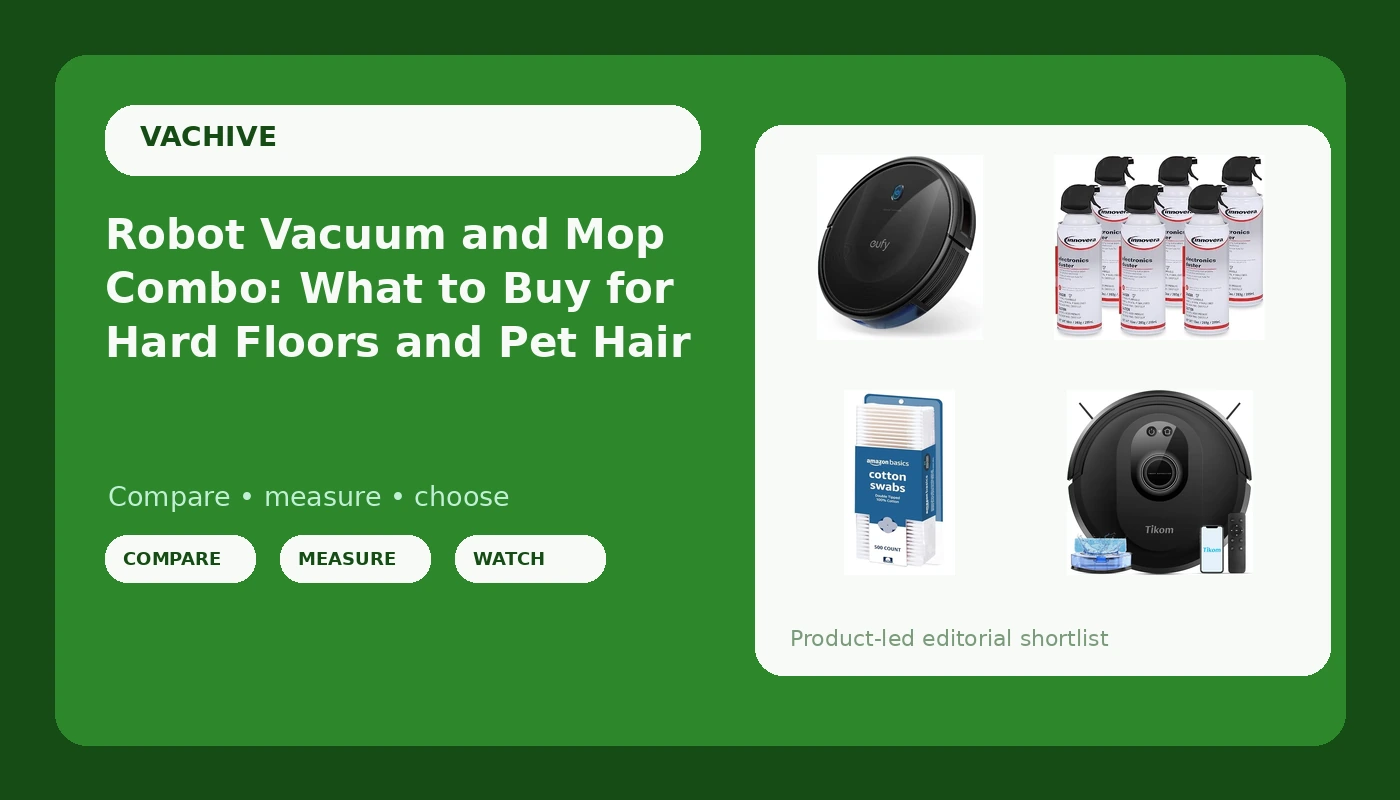
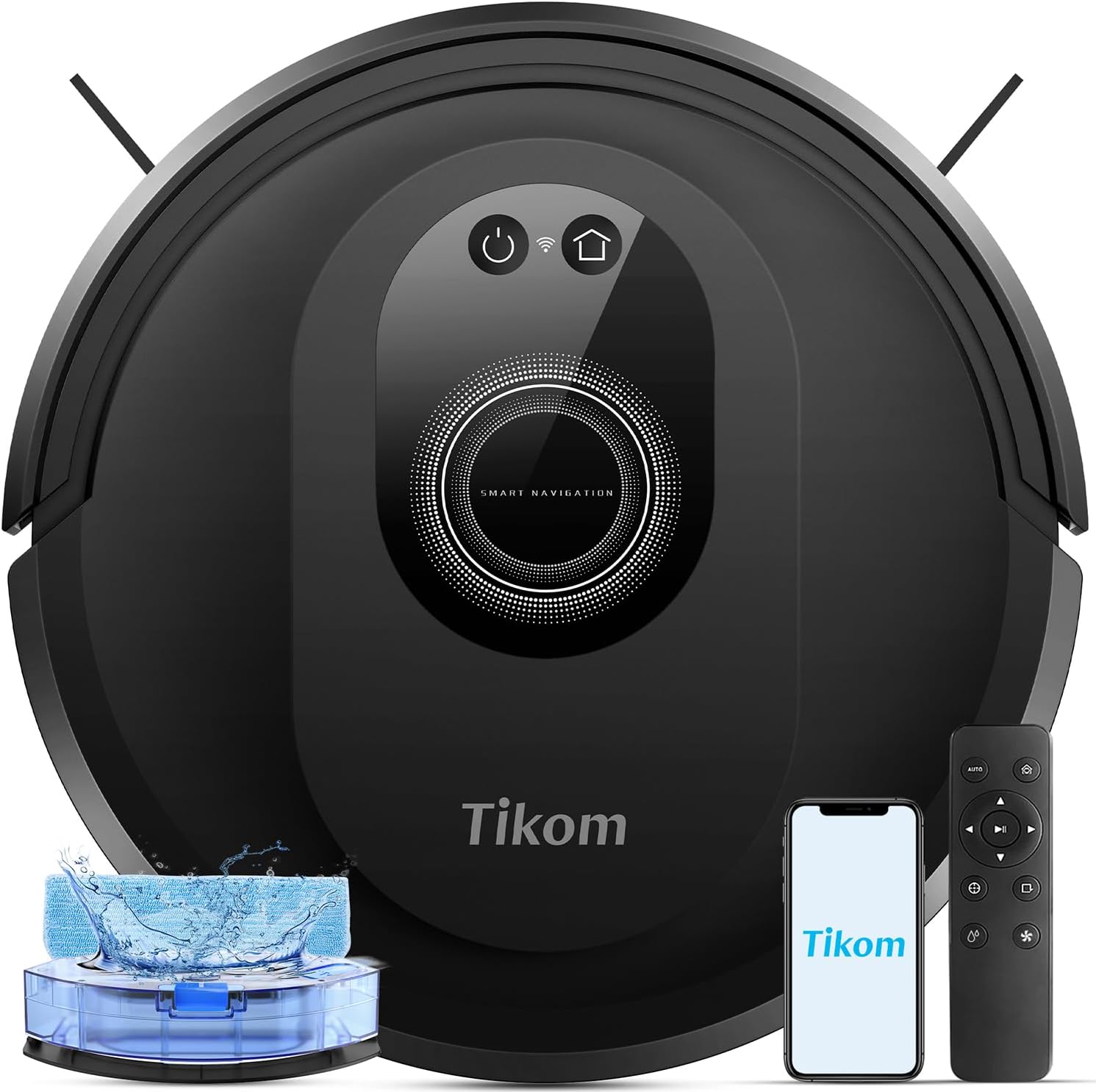
Best for Most Homes: Tikom G8000 Max Robot Vacuum and Mop Combo
If your house is mostly hard floor with a rug or two, this is where I would start. The Tikom G8000 Max is a combo unit rated at 5000Pa with a 150 minute maximum runtime, app and remote control, and self charging, and it is built for hard floor, carpet, and pet hair.
The 150 minute rating is the number to hold up against your floor plan. One open main floor is a different job than three bedrooms and a hallway, and maximum runtime is measured on the lowest power setting on hard floor. Plan for less than the number on the box once you push suction up for carpet. That is not a knock on this machine, it is how every runtime number in this category is quoted.
The remote matters more than people expect. Apps are great until they ask you to update mid run, and then your scheduled clean is gone and the machine is a brick with a schedule. A physical remote means the vacuum still works on the days the app is being the app.
The mop side is a damp pad on a reservoir, not a scrubber. Run it on a floor that has already been vacuumed. Mop over grit and you are dragging a wet towel across a dirty floor, and you will see the streaks in the morning light. Used correctly, it keeps a kitchen floor from feeling gritty between real mopping days.
What this machine is not is self emptying. There is no dock that sucks the bin into a sealed bag, so the bin is your job. Empty it after every run. That single habit is the difference between a robot that helps and a robot that smells.
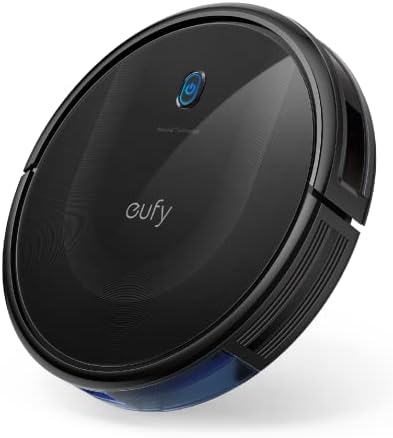
Best for Small Apartments With No Rugs: eufy 11S MAX
The eufy 11S MAX is the machine I recommend in exactly one context: a small apartment or a single room with hard floors and no rug transitions.
Two specs carry it. It is super thin, which means it slides under low furniture that taller robots bump into and give up on. It is quiet, quiet enough to run while you are on a call or while a client is napping in the next room. In a 600 square foot apartment, those two things matter more than suction.
What it does not have is mapping, a mop, or a self emptying dock. It roams and bumps, and on one open floor it will find most of the debris eventually. With two cats and no rugs, that is a perfectly good daily crumb chaser and nothing more.
On anything with a thick pile rug, a rug lip in every doorway, or more than one floor, skip it. I have watched thin robots stall on transitions that a heavier machine climbs without noticing. If your home has rugs at every threshold, buy the combo above and let it do the whole floor.
Plan on the maintenance habit either way. No robot at this level empties itself, and the brush roll will collect hair. If you will not clear it weekly, no robot in this guide will work for you.
The accessories that keep a robot running
Two small items earn a permanent spot in my kit. Neither is a robot vacuum, and both are the reason the robots in my clients' homes are still running after a year.
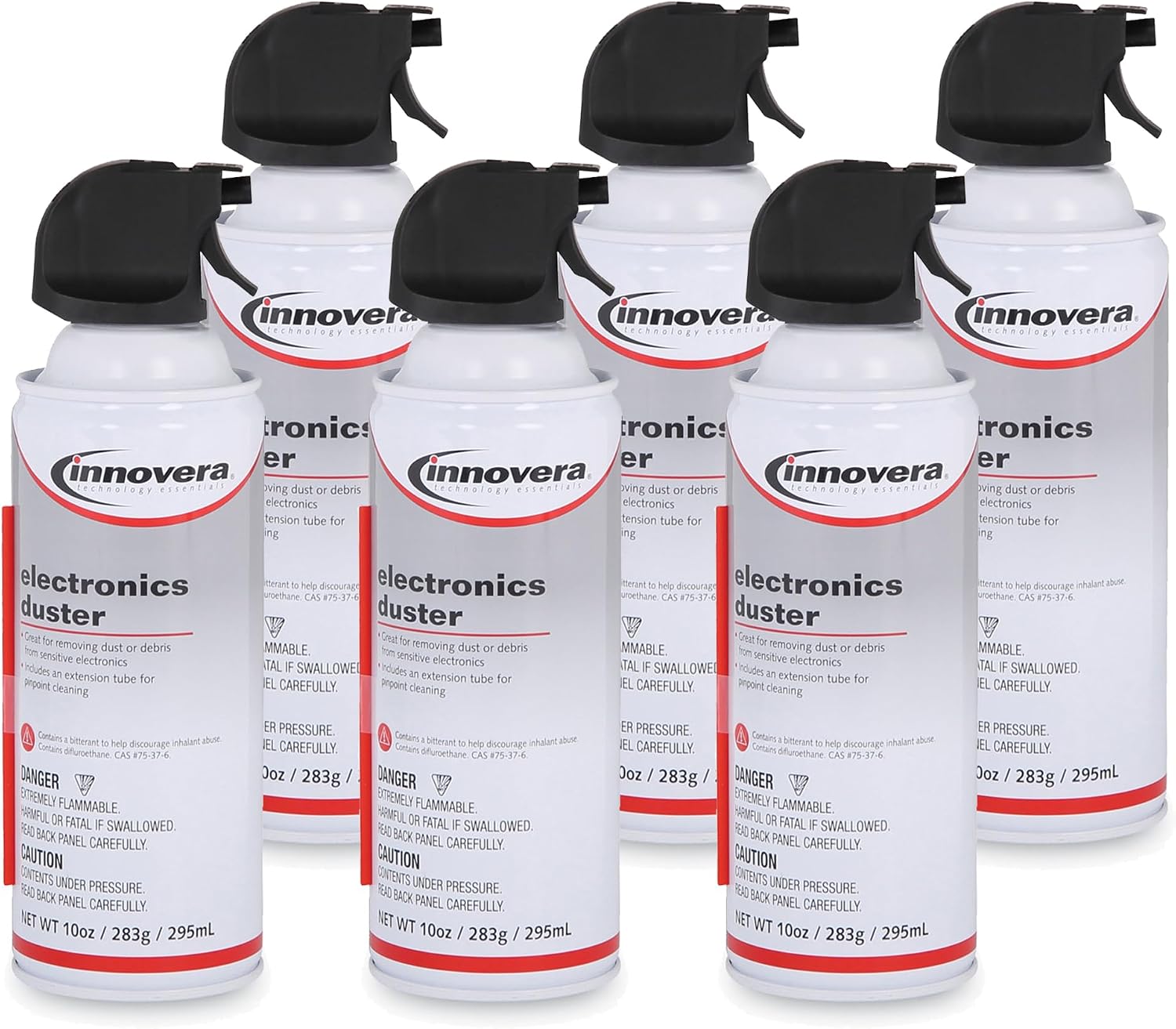
Innovera Compressed Air Duster Cleaner
Use this for the places a cloth cannot reach: the bin seal, the sensor windows, the charging contacts, and the crevices around the swivel wheel. Dust packed into the bin seal is why a robot that used to pick up everything starts leaving a trail down the middle of the room.
Three rules. Short bursts, not one long blast. Hold the can upright so you are not spraying propellant onto plastic. Never blast the filter media, because you will tear it, and never spin the brush roll with compressed air at close range, because you can push debris into the motor bearing. Used that way, one can lasts months.
Amazon Basics Double-Tipped Cotton Swabs
Charging contacts and drop sensors are the two failure points on any robot, and both want a dry swab rather than a wet cloth. The double tipped swabs are also the right tool for the seam where the brush roll housing meets the chassis, which is exactly where hair wraps and slowly chokes the motor.
Keep them dry or barely damp. Water near charging contacts is how people turn a five minute chore into a repair ticket. A 500 count box lasts a long time at two swabs a week.
How I judge a robot vacuum
These are the criteria I apply to every unit before it goes into a client's home. I care about five things, and none of them is a mapping animation.
- Rug transition: the half inch lip test. Can it climb from hard floor onto a low pile rug without a rescue?
- The mess index: what is in the bin after a scheduled run on a floor that was already clean. That number never lies.
- Edge cleaning: how close it gets to baseboards. Most robots leave a strip you still have to vacuum by hand, and that strip is the whole reason people say a robot "misses spots."
- App survival: does the schedule survive a firmware update without being redrawn? I have lost count of the machines that forgot my client's house overnight.
- Maintenance time per week: brush roll, filter, bin, sensors. If the routine takes more than ten minutes, it will not happen, and the machine will fail slowly.
The reference table
This is the table I keep on my phone when a client texts me from a store aisle. It is organized by what each item does in the routine, not by spec sheet order, because the spec sheet is what got them confused in the first place.
| Product | Role in the routine | Best floor type | Price |
|---|---|---|---|
 Visit on Amazon → Visit on Amazon →Tikom G8000 Max Robot Vacuum and Mop Combo |
Main daily runner with a light damp mop pass | Hard floors with low pile rugs | $129.99 |
 Visit on Amazon → Visit on Amazon →eufy 11S MAX Robot Vacuum Cleaner |
Quiet daily crumb chaser under low furniture | Single room or small apartment, no rug transitions | $139.99 |
 Visit on Amazon → Visit on Amazon →Innovera Compressed Air Duster Cleaner |
Clears bin seals, sensor windows, and charging contacts | Any | Check current Amazon price |
 Visit on Amazon → Visit on Amazon →Amazon Basics Double-Tipped Cotton Swabs |
Wipes contacts, drop sensors, and the brush housing seam | Any | $2.13 |
What the specs do and do not tell you
Suction ratings are quoted at the inlet, not at the floor. A 5000Pa rating tells you the motor can pull hard, not that the machine seals against your particular carpet. On low pile and hard floor, that rating is more than enough. On a thick frieze carpet, no number on a box will save you, because the brush roll and the seal do the work.
Maximum runtime is the other number that misleads. It is measured on the lowest suction setting on hard floor. If you run max suction on carpet, expect a fraction of it. Match the runtime rating to your floor plan, not to the marketing copy.
"Ideal for pet hair" is a claim you verify with your eyes, not with the listing. Look at the brush roll. A rubber or combo roller sheds wrapped hair far more easily than a bristle brush, and hair wrap is what kills suction over weeks, not days.
Self emptying is a luxury until you have pets. Then it is survival, because a bin that fills in two days turns a daily robot into a weekly one. Neither machine in this guide empties itself, so the bin is a habit you own either way. Empty it after every run and rinse the filter monthly. That is the whole secret.
Finally, app quality is the spec nobody lists. Mapping that redraws your house every run, no go zones that reset after an update, and firmware prompts that interrupt a clean are all reasons people stop using a robot that vacuums perfectly well. Judge the app on whether it stays out of your way.
Should you buy the Tikom G8000 Max?
Yes, if your home is mostly hard floor with a rug or two and you want one machine to run daily and mop lightly. The 5000Pa rating and the 150 minute maximum runtime cover a normal single floor, the remote is a real backup when the app misbehaves, and the mop pad keeps a kitchen from feeling gritty between deep cleans.
The compromises are honest ones. There is no self emptying dock, so you empty the bin yourself after every run. The mop is a damp pad, not a scrubber, and it needs a vacuumed floor underneath it. If you accept those two things, this is the combo I would put in a normal house.
Should you buy the eufy 11S MAX?
Buy it for a small apartment or a single room with hard floors and no rug lips. Super thin and quiet is exactly the right pair of traits for a 600 square foot space where the robot has to run while you are home, and the price of entry is lower than a combo unit.
Do not buy it for a house with rugs at every doorway, thick carpet, or multiple floors. It has no mapping and no mop, so it wanders rather than plans, and it will need a rescue on transitions. As a daily crumb chaser in a small space, it earns its spot. As a whole home machine, it does not.
Should you buy the air duster and the cotton swabs?
Yes, and they cost less than a single replacement filter. The compressed air duster clears the bin seal, sensor windows, and charging contacts that a cloth cannot reach, which is where most "my robot stopped picking up" problems actually start. The cotton swabs handle the contacts and the brush housing seam without introducing moisture where it does not belong.
Neither one is exciting. Both are the reason a robot is still running in month twelve instead of sitting in a closet. If you are spending real money on a robot vacuum and mop combo, spend a few dollars on keeping it alive.