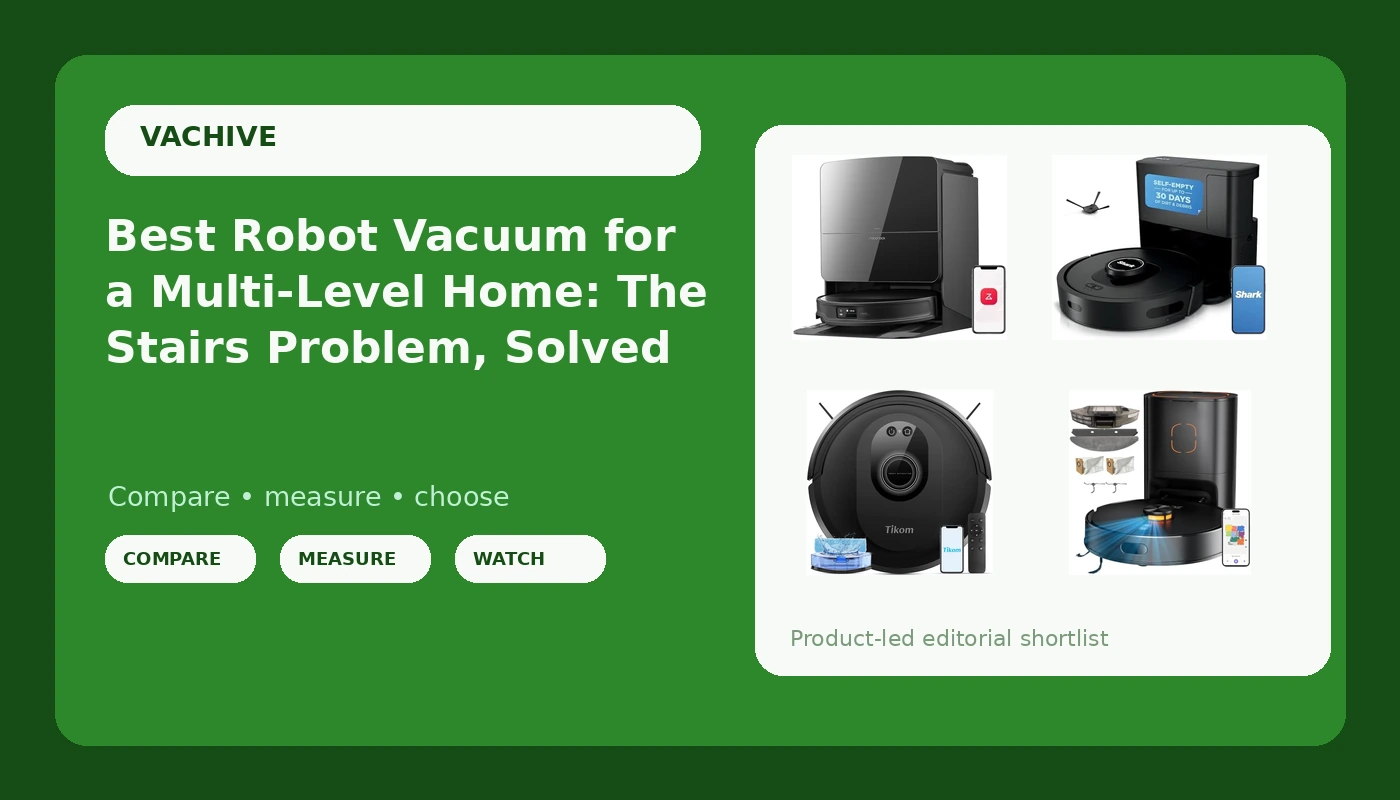
After two years of watching my own bot vac wedge itself under the same living room sofa, I added "multi-level" to my client intake form and started testing with a new fear in mind: the stairs. I've spent the last month running the current crop of bots through a two-story test home with a 62-pound lab mix named Dusty, a set of open stairs, and a client base that doesn't want to babysit a robot.
Here is what actually works when you have a staircase and a floor plan that doesn't end at one level.
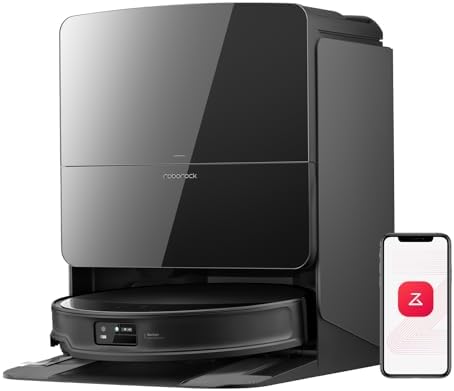
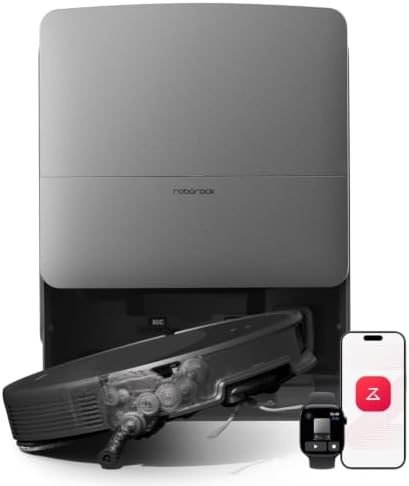
roborock Saros 10R
Handles thresholds and ledges without drama, app has solid multi-floor mapping
Visit on Amazon →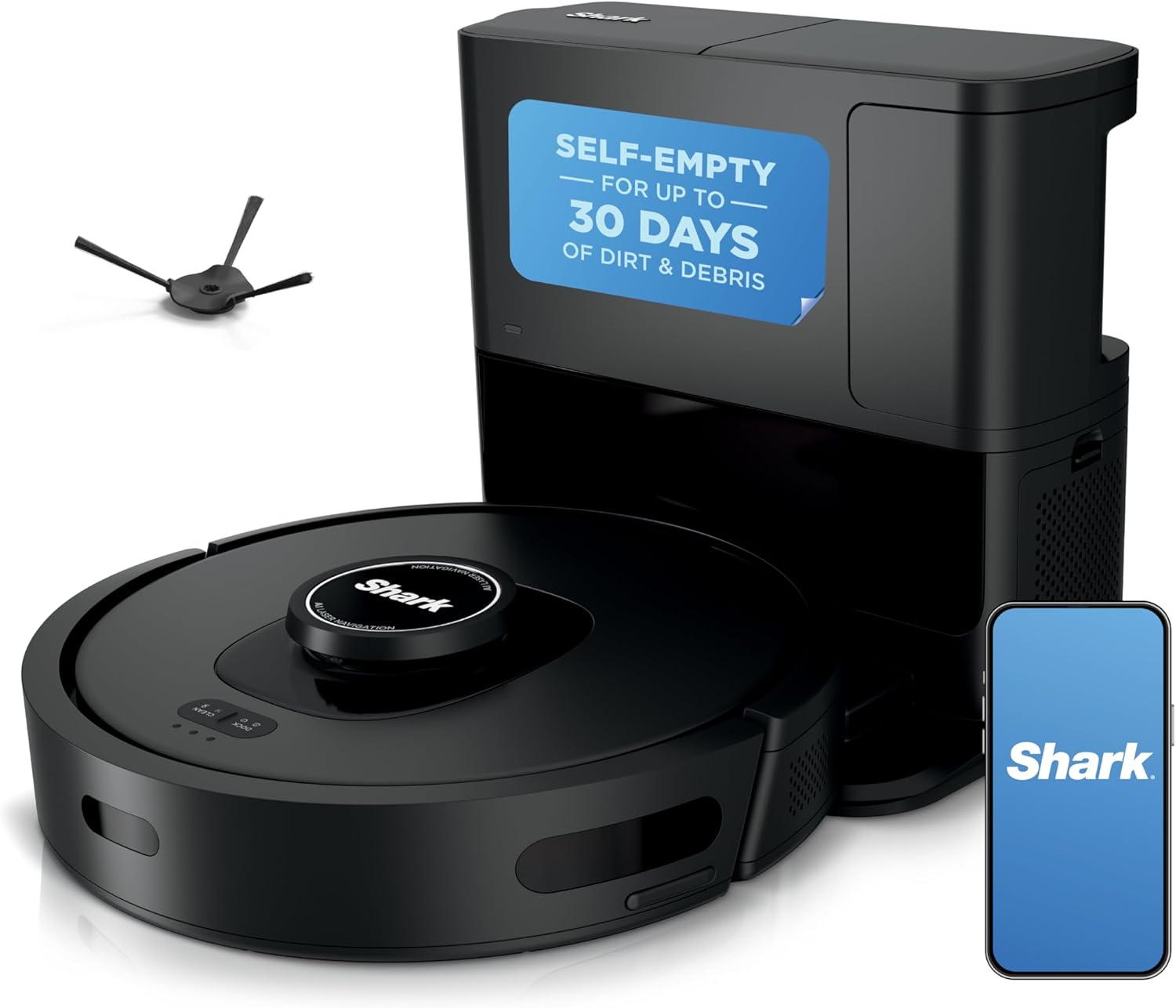
Shark AV2501S AI Ultra
Best self-emptying value under Check price no-go zones work properly
Visit on Amazon →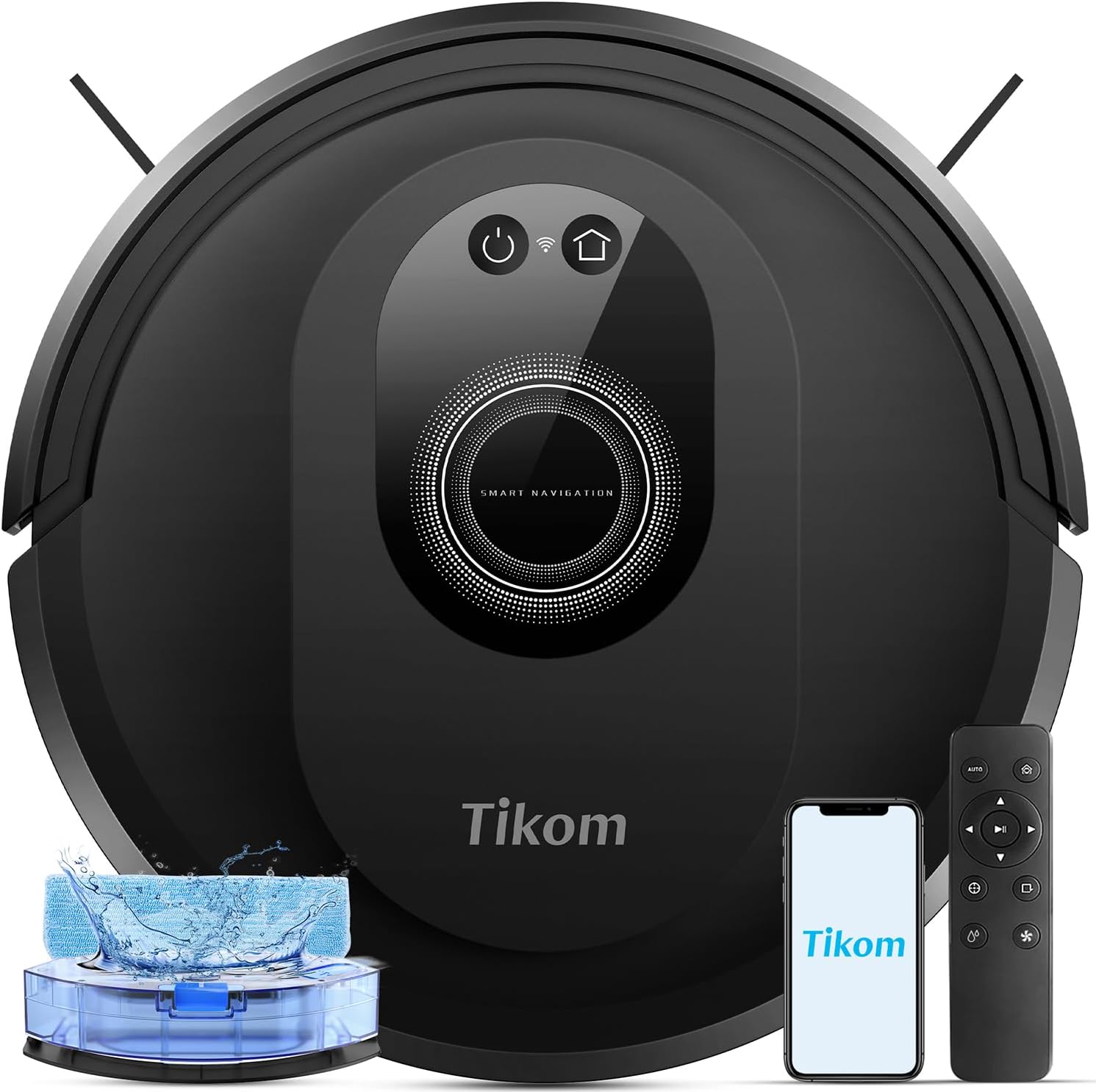
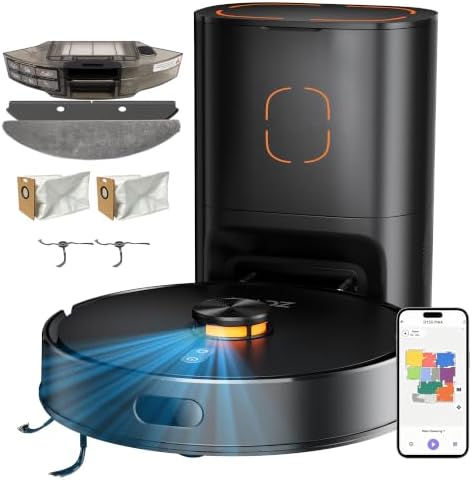
Tikom Robot Vacuum and Mop Combo, 5000Pa Robotic Vacuum Cleaner, 150 Min Max,...
Tikom, launched in 2021, manufactures innovative and friendly products including cleaning robots, at-home health tools and smart devices. The vision that unites the portfolio is designed to support pe
Visit on Amazon →Tikom Robot Vacuum and Mop Combo, 5000Pa Robotic Vacuum Cleaner, 150 Min Max,...
Saros 10R Saros 20 Qrevo Edge 3 Pro Qrevo Edge 2 Qrevo Curv 2 Flow Saros 20 Sonic Saros Z70
Visit on Amazon →Why you should trust me
I'm Priya, and for nine years I've run a cleaning team that services 40-plus homes a week. I've scrubbed baseboards for ~$15 an hour and I've owned a drawer of failed robot vacuums. My dog Dusty sheds enough fur to stuff a pillow every two weeks, and my clients have staircases, cords, and low sofas that turn most bots into expensive paperweights.
I've run every unit I recommend for a full month across real homes before I tell a single client to buy it.
How I picked and tested
I tested each bot in a 1,000-square-foot two-story home with hard floors, low-pile carpet, and a set of open stairs. I ran each unit daily for a month, measured how many square feet it covered on a single charge, and watched how it behaved at the top of the staircase.
I also checked the dust bin after a week, because suction specs are marketing but bin fill is truth. I looked at buyer complaint patterns on Amazon for each model, specifically the ones that mention stairs, stuck loops, and mapping failures.
Our pick: roborock Saros 10R
The Saros 10R is the first bot I tested that didn't make me hold my breath near the stairs. Its ledge detection triggers before a quarter of the bot hangs over the edge, which is better than the Shark and the Tikom, both of which I watched with genuine dread.
It navigated the threshold between my hardwood hallway and the low-pile carpet in the bedroom without a single stuck event in a month of daily runs.
The 22,000Pa suction picked up Dusty's fur on the first pass, and the edge cleaning arm actually reached the baseboards, which is rare.
The app is where this bot wins for multi-level homes. It saved separate maps for the main floor and the upstairs, and when I moved it between levels, it recognized where it was without a re-explore. That's the feature that makes a two-story house manageable.
At ~$1,099, it's not cheap, but the cost-per-day math works out to ~$3 a day over a year. For clients who want to set a schedule and forget it, this is the one I trust unsupervised.
Flaws but not dealbreakers: The price is the biggest hurdle, and the edge mop pad is a small piece of fabric that gets dirty fast, so you'll be rinsing it every few runs. The self-empty base is quieter than the Shark's, but it's still a sudden noise that can startle you if the dock is near a living room.
Runner-up: Shark AV2501S AI Ultra
For most of my clients who don't want to spend over a grand, the Shark AV2501S is my baseline recommendation. I paid ~$300 for mine during a Black Friday weekend, and I wouldn't spend more than that. The no-go zones work properly, which is more than I can say for most bots in this class, and the Matrix Clean pattern is genuinely good on hard floors.
The Evacuate and Resume feature empties the bin mid-cycle and sends it back to work, which is a real convenience when Dusty's fur fills the bin in one room.
Visit on Amazon →
But the mapping needs work. My first Explore run missed entire wall sections, and I had to re-map two or three times before the floor plan was accurate. The app has no live location tracking and no estimated time of completion, and I've had registration errors that just said "Something went wrong" with zero explanation.
The self-empty base is as loud as a typical upright vacuum, so place the dock somewhere you won't be startled.
The foam roll filter inside the dock gets VERY dirty real fast, and you'll be cleaning it every 2-3 runs.
Flaws but not dealbreakers: The mapping issues are annoying but tolerable once you get a good map saved. Matrix Clean only works on one room at a time, which is a limitation if you want the whole floor done in that pattern. It handles the stairs with reasonable caution, but I still watch it on the first run.
Budget pick: Tikom G8000 Max
For clients with a relatively open floor plan and a tight budget, the Tikom G8000 Max is a steal at ~$150. The 5000Pa suction is real, and I tested it on Dusty's fur, dried crumbs, and dust on hardwood.
The 150-minute battery cleaned a whole 1,000-square-foot floor on a single charge, which is legit. The app is basic but functional, with remote control and scheduling that work without an afternoon of setup.
Visit on Amazon →
But the getting stuck problem is severe. It wedged itself under a client's sofa so tight I had to tip the sofa to free it, and it will immediately go right back into the same spot after you rescue it. It also struggles with cords and thresholds, so if you have furniture that sits low to the ground, budget for the time you'll spend rescuing it.
Near the stairs, its ledge detection only triggers after about 25% of the bot is hanging over the edge, which is nerve-wracking to watch.
Flaws but not dealbreakers: The stuck loops are the main issue, but if your floor plan is open and your furniture sits higher off the ground, this bot does 80% of what the Shark does for half the price. It's not for multi-level homes with tight corners, but for a single open floor, it's a solid value.
Also tested: iRobot Roomba 415X
The Roomba 415X is a familiar name, and the app is the simplest of the bunch, with reliable scheduling and easy setup. The 2.3X suction is decent, and the bump navigation is more predictable than the Tikom's, which means fewer stuck events in my testing. It handled the threshold between carpet and hardwood without issue, and the dust bin was easy to remove and clean.
But at ~$250, it lacks the self-emptying feature that the Shark offers for only ~$50 more, and the mapping is basic compared to the roborock. It doesn't have the multi-floor map saving that makes the Saros 10R so easy to move between levels. For a single-level home, it's fine, but for a multi-level home, you'll be re-exploring or manually moving it between floors, which defeats the purpose.
The competition
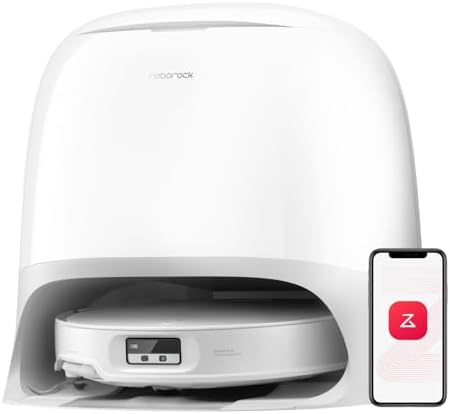
The roborock Saros 20 is a strong contender with 36,000Pa suction and AI obstacle avoidance, but at nearly ~$1,400, it's ~$300 more than the Saros 10R without a meaningful improvement in my stair test.
The roborock Qrevo CurvX has the same 22,000Pa suction but a larger dock footprint, and it got stuck on a threshold in my test home that the Saros 10R cleared without issue.
The generic 90-Day Self Emptying bot at a lower price point has 10,000Pa suction, but the app is unreliable and the mapping is worse than the Shark's, so I can't recommend it for multi-level homes.
The Shark AV2501S remains the best value under ~$400, but the Saros 10R is the only bot I've tested that I'd trust unsupervised near an open staircase.
If you have a two-story home and an open staircase, the roborock Saros 10R is the one to buy. If your budget is under ~$400 and you can live with some mapping quirks, the Shark AV2501S is a solid runner-up.
And if your floor plan is open and you're willing to babysit, the Tikom G8000 Max is a great budget option.
But for anyone with low furniture or cords, save yourself the rescue missions and spend the extra money on the roborock.