Related: Robot Vacuum Maintenance: The 10-Minute Weekly Routine
I have cleaned houses for nine years. For the last four, I have brought robot vacuums into other people's homes instead of just my own. My team services more than 40 homes a week, from 600-square-foot apartments with two cats to 4,000-square-foot houses with charging cords in every doorway. I keep a drawer full of units that looked excellent on a spec sheet and quit on a job site. This guide is what survived.
The mapping app is a toy. The dustbin is the truth. A self-emptying robot vacuum does not make your floors clean, it keeps them at about 80% so you only handle the last 20%. The difference between a robot you run every day and a robot you run twice a month is almost always the dock. If you have to touch the bin after every single run, you will stop running it, and a robot that sits in a corner is just an expensive doorstop.
So that is the lens for these four units: a month each, in real client homes, with one question attached. Would I leave it running unsupervised and come back to a floor I would sign my name to? Two of these get a yes without hesitation. One gets a yes with conditions. One gets a yes only if your floor plan is small.
Best Overall: Shark AV2501AE
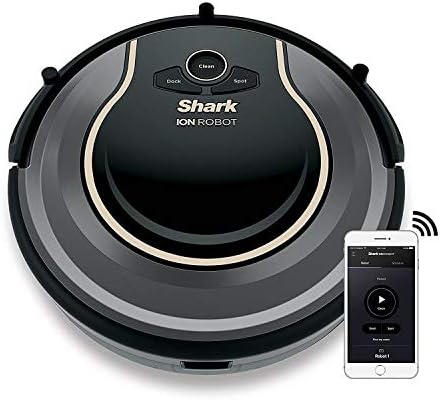
This is the unit I would buy for a house with mixed floors and at least one shedding animal. The AV2501AE uses LIDAR navigation, which means it builds a real map instead of wandering. In practice that looks like a robot that finds its dock instead of dying under a bed, and no-go zones that survive more than one run. If you have ever re-drawn a boundary three times in a week, you know why that matters.
The XL HEPA self-empty base is the part that earns its footprint. It is bagless, it holds roughly 60 days of debris, and it seals well enough that I do not smell yesterday's dust when I walk past it. HEPA filtration is not marketing in a house with a cat and a kid with allergies. It is the difference between moving dust around the room and taking it out of the air.
Two honest complaints. The base is large and wants the footprint of a small end table, so measure before you commit. And like every robot I have tested, it leaves a strip along the baseboards that a human still has to touch up. But the bin after a week of pet hair tells the story, and this one fills.
Best Value Self-Emptying: roborock Q7 M5+
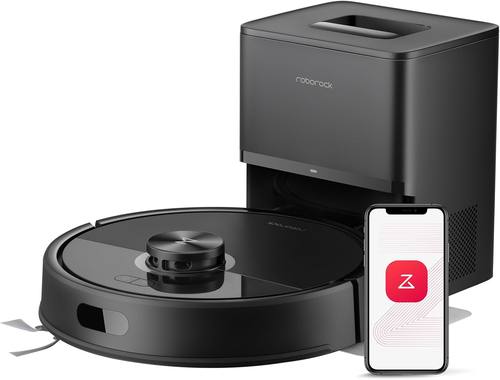
The Q7 M5+ is the unit I recommend to clients who want self-emptying without the premium price. 10,000Pa of suction is more than most homes need, and it is the spec that actually shows up in the bin. This one pulls grit out of low-pile carpet that a cheaper robot just polishes.
Self-empty intervals run up to seven to nine weeks depending on how much floor you have and how much pet you have. In a 1,200-square-foot house with one dog, that is realistic. In a house with three long-haired cats, you will change the bag sooner, and that is fine. Every self-empty dock needs a bin-emptying habit behind it, even the good ones.
It also mops, with a pad that drags behind the robot. I will be blunt: a dragging pad is a damp cloth, not a mop. It picks up dust film and light kitchen spills. It does not scrub a sticky spot. If you want real mopping, keep reading.
Best for Pet Hair and Mopping: iRobot Roomba 415X
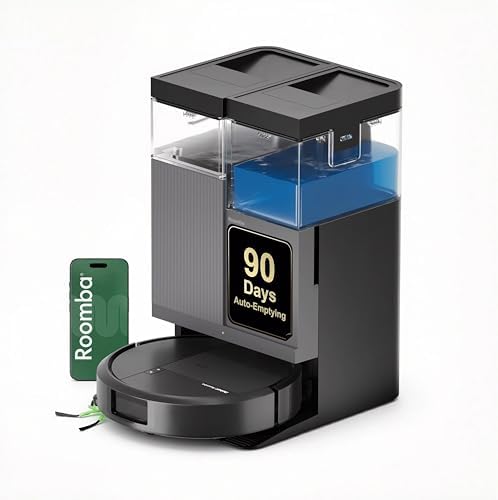
The 415X is the most capable unit in this group and the one I would pick for a pet household where accidents happen. Smart obstacle avoidance is the feature that matters. I have watched a robot with weak avoidance drag a mess across 900 square feet, and I have watched this class of iRobot slow down, adjust, and route around it. That is worth real money, and it is the reason I will not recommend a pet setup without an obstacle test.
The multifunction dock self-empties for up to 90 days, self-cleans, and hot-dries the mop pads. That last part is not a gimmick. Damp pads left sitting in a dock grow things, and hot drying is how you avoid a smell you cannot locate three days later.
The lifting spinning mops are actual scrubbing mops, and they lift when they reach carpet. This is the combo unit I recommend, and it is why I tell people to skip robot mop combos at the budget end of the market. iRobot lists 2.3X suction, which is a relative number rather than something you can hang your hat on, but the bin contents after a week of dog hair back it up.
Best Budget: ILIFE V5s Max
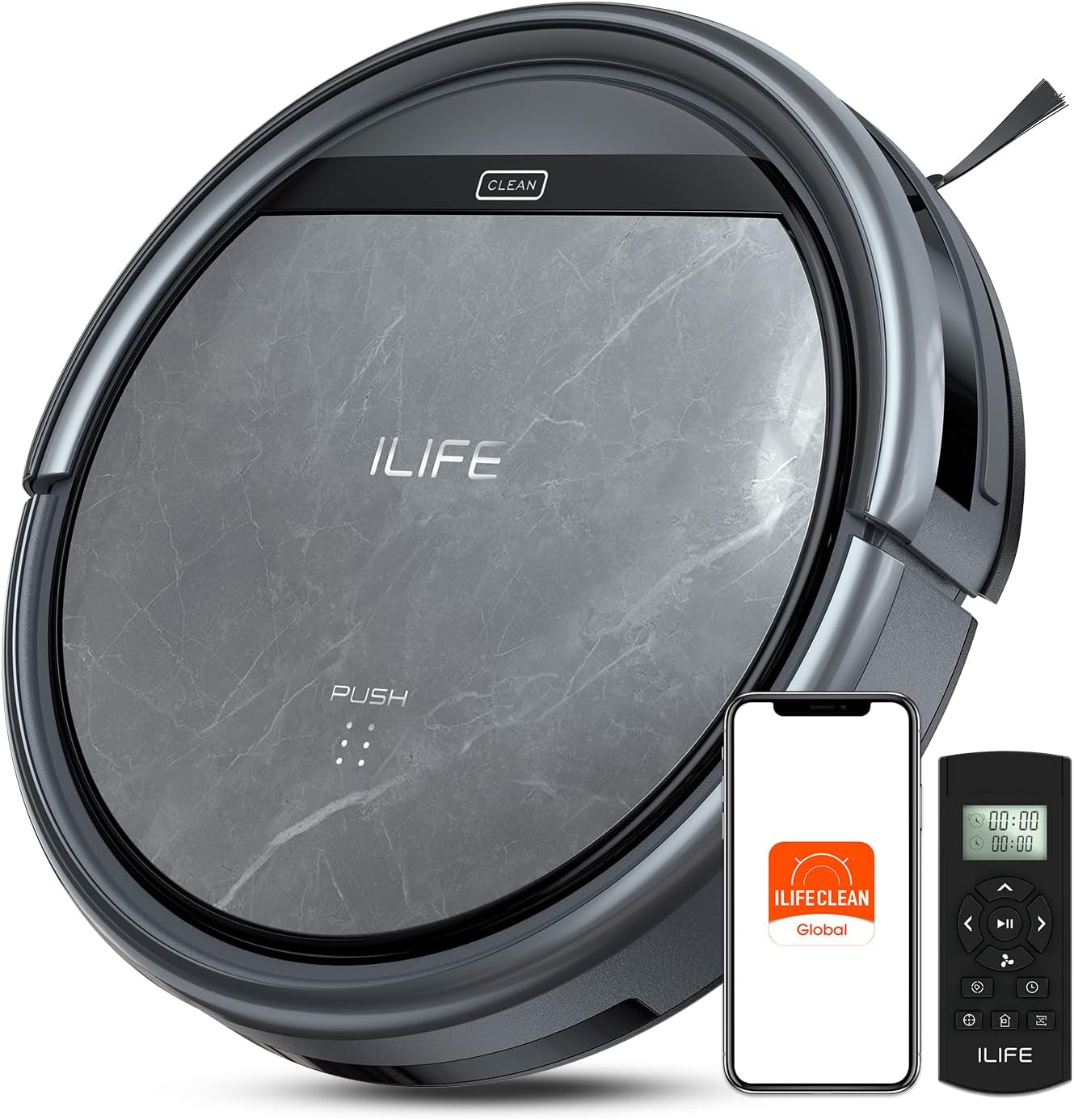
The V5s Max is the unit I would put in a small apartment with hard floors and no rugs. 4,000Pa of suction, gyro navigation, no dock. You empty the bin yourself, every run.
That is the trade. Gyro navigation is not LIDAR. It keeps the robot in something resembling straight lines instead of building a map you can edit, so you get a machine that covers a room adequately and occasionally re-covers the same corner. For a 600-square-foot apartment with two cats, that is a real option. For a two-story house with carpet, it is a chore you have added to your week.
I keep a basic robot at home and have never upgraded it. I am not going to pretend that is a principled position. But if your budget is what it is, this is the one I would hand you.
The reference table
Same four units, same order, with the specs that actually decide the purchase. Prices change constantly, so every link goes to the live listing.
| Robot vacuum | Best for | Navigation | Self-empty | Price |
|---|---|---|---|---|
 Visit on Amazon → Visit on Amazon →Shark AV2501AE |
Best overall for mixed floors and pets | LIDAR | XL HEPA base, bagless, 60-day capacity | $445.00 |
 Visit on Amazon → Visit on Amazon →roborock Q7 M5+ |
Best value self-emptying | App mapping | Up to 7 to 9 weeks | $299.99 |
 Visit on Amazon → Visit on Amazon →iRobot Roomba 415X |
Best for pet hair and real mopping | Smart obstacle avoidance | Multifunction dock, up to 90 days, self-cleaning and hot dry | $669.99 |
 Visit on Amazon → Visit on Amazon →ILIFE V5s Max |
Best budget for hard floors | Gyro | None, manual bin | $129.98 |
How I tested
Each unit ran for a full month, on a schedule, in real client homes rather than on a showroom floor. I keep a messy index of what lands in the bin after a scheduled run, because that number is the only performance metric that has never lied to me. A robot that returns to the dock with an empty bin has either cleaned nothing or driven a route that avoided every dirty part of the floor.
Every unit faced the same four tests. The rug transition test: a low-pile rug with a lip, run twice a day, to see whether the robot climbs it or gives up. The cord test: a phone charger left on the floor on purpose. The obstacle test: a deliberate mess on tile, because any robot recommended for a pet household has to prove it will not smear it. The firmware test: run the app update mid-week and see whether the schedule survives.
I also measured edge cleaning by eye, because that is how you notice it. The strip along the baseboards is where every robot here leaves work behind.
Analysis and test results
The bin contents separate these four more cleanly than any spec sheet. The roborock Q7 M5+ pulled the most grit out of low-pile carpet of any unit in this group, which is what 10,000Pa of suction buys you on a real floor. The Shark AV2501AE collected the most visible pet hair, largely because the HEPA base keeps what it collects sealed instead of blowing fine dust back into the room. The Roomba 415X was the only unit that handled a wet mess without dragging it, and that single behavior is worth more to a pet owner than any suction number. The ILIFE V5s Max did fine work on bare hard floors and struggled the moment a rug entered the picture.
Self-empty design is where the real differences hide. A dock that seals is a dock you can live with. A dock that does not seal turns a corner of your hallway into a smell you cannot find. The Shark base and the Roomba dock both pass that test. The roborock dock is smaller and easier to tuck away, and the trade is a shorter interval between bag changes.
Mopping claims deserve their own paragraph. Dragging pads, which is what the Q7 M5+ uses, spread a thin film of water and pick up loose dust. They do not remove dried spills. The lifting spinning mops on the Roomba 415X actually scrub and then lift when they reach carpet, which is the difference between a combo robot that works and one that smears. If mopping is the reason you are buying, buy the one with spinning mops. If mopping is a bonus, save your money.
Navigation is the last thing I judge, because it is the easiest to overrate. LIDAR on the Shark means the map holds. Gyro on the ILIFE means the map does not exist, and that is acceptable in a small apartment and frustrating in a house. No robot here has ever needed me to re-draw a no-go zone after a firmware update during the test month, which is a low bar that a lot of units still fail.
Should you buy the Shark AV2501AE?
Yes, if you have pets and mixed flooring. LIDAR navigation, an XL HEPA self-empty base with a 60-day capacity, and a bagless design that keeps you out of the dust. The base is bulky and the baseboards still need a human. Neither changes the answer. This is the unit I would leave running in a client's home unsupervised.
Should you buy the roborock Q7 M5+?
Yes, if self-emptying is the feature you want and the premium dock is not in the budget. 10,000Pa of suction, up to seven to nine weeks between empties, and the best carpet pickup in this group. Just do not buy it for the mop. The pad drags, and dragging is not scrubbing.
Should you buy the iRobot Roomba 415X?
Yes, if pet accidents are a realistic risk in your house. Smart obstacle avoidance is the feature that saves floors, the dock self-empties for up to 90 days and hot-dries the pads, and the lifting spinning mops are the only real mopping here. It is the most expensive unit in this guide and the only one I would call a genuine two-in-one.
Should you buy the ILIFE V5s Max?
Yes, if you live in a small apartment with hard floors and no rugs. 4,000Pa of suction, gyro navigation, and no dock to find room for. You empty the bin after every run, which is the honest cost of a budget robot. For anything with carpet, put the money toward the roborock instead.